

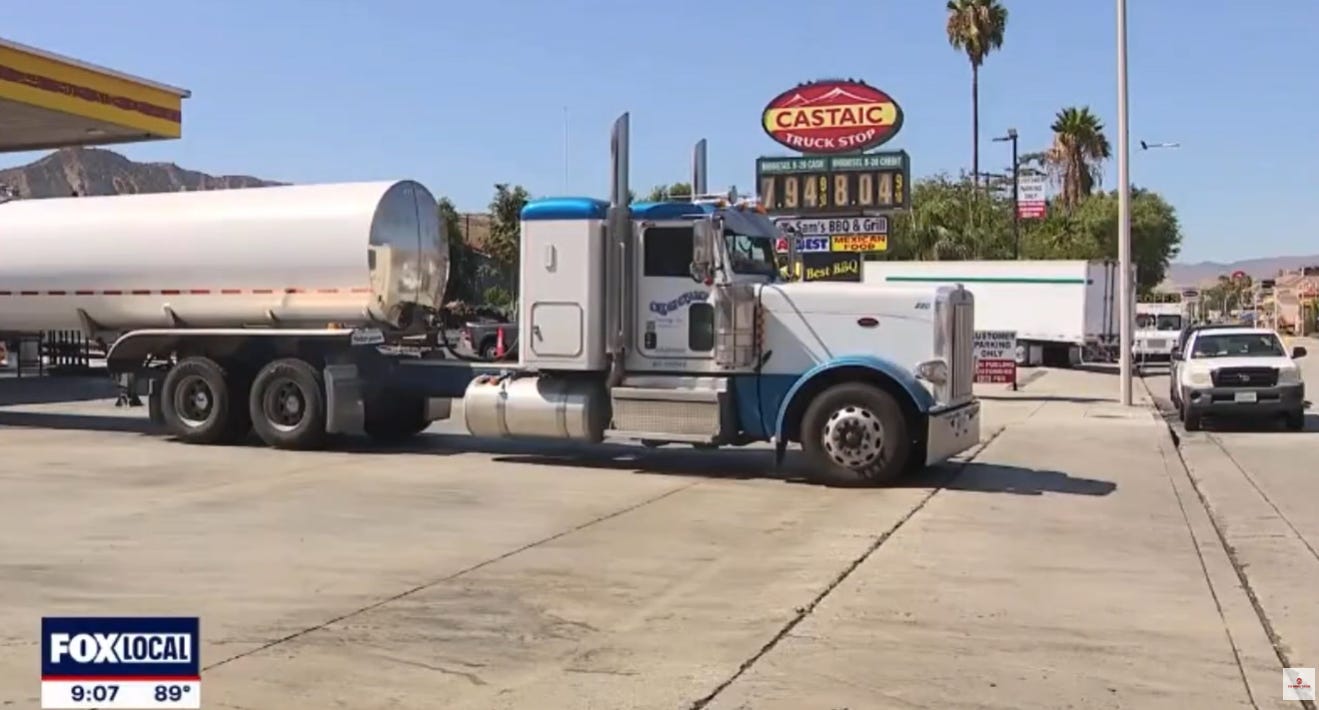
“We are at record highs in diesel, and yet we are not at record highs in gasoline,” Rey Trevnio said in a Fox 4 Local interview.
Drivers across Texas and the nation are facing a painful reality at the pump: diesel prices have hit an all-time record, climbing to nearly $6 a gallon in the Lone Star State, while regular gasoline approaches $4.50 nationally. The surge, driven by a perfect storm of geopolitical tensions—from Iran's restrictions through the Strait of Hormuz to ongoing damage to Saudi pipelines and the Russia-Ukraine conflict—shows no signs of slowing down.
Experts warn that these record fuel costs won't stay confined to the gas station; they're poised to ripple through nearly every corner of the economy, from grocery bills to shipping costs. And here's the troubling part: even if global conflicts ended tomorrow, it could take months for prices to fully retreat. With U.S. refineries already running at near-maximum capacity, consumers have few options beyond shopping around and tightening their belts.
This was a lot of fun visiting with Casey Stegall from Fox 4 Local. Buckle up, and we will get through this, and it will get better.
1. Record-High Diesel and Gasoline Prices
The report opens with the headline issue: diesel prices have hit an all-time record in Texas at nearly $6 per gallon, surpassing the 2022 record by over 60 cents. Regular gasoline is averaging nearly $4 per gallon in the DFW area and $4.47 nationally. These prices represent the highest levels recorded to date, with consumers already feeling the immediate impact at the pump.
2. Global Supply Chain Disruptions
Multiple geopolitical factors are driving the price surge:
Iran’s Strait of Hormuz restrictions and damage to a key Saudi pipeline have complicated and increased the cost of transporting crude oil
Insurance costs for tanker transport have skyrocketed to 5-6 times normal amounts, which refineries are passing along to consumers
Russia-Ukraine conflict is reducing global diesel supply, as Ukraine continues to bomb Russian refineries—and Russia is one of the world’s largest diesel suppliers
3. Limited Production Capacity
U.S. refineries are already operating at 97% capacity, leaving minimal room to quickly increase production to meet demand or offset global supply shortages.
4. Broader Economic Impact
The report emphasizes that these record fuel costs will eventually affect consumer prices across nearly every sector of the economy, as transportation costs increase for goods and services.
5. Long-term Outlook
Experts warn that even if current conflicts ended immediately, it would take months for prices to fully retreat, suggesting consumers should prepare for elevated fuel costs over the next 6+ months.
We see oil prices falling, demand destruction kicking in, and refineries choosing which refined products to produce more of to help lower costs. That will raise other costs; producing more diesel means producing less gasoline.
The Crude Truth is we need better energy policies and less regulatory overreach so that we can build refineries again, newer and with less impact on the environment, at lower costs to consumers.
We have some huge oil projects underway, and stay tuned for our podcast this week, where we visit with key geologists about our newest project.
Also, https://pecos.energy/info/ if you have any questions about oil, gas, and our energy markets.
Check out our new website: https://pecos.energy/
